
How to Wear a Saree for Beginners: 6 Easy Steps
A simple guide to your first saree drape, written at Om Homestay in Upper Tapovan, Rishikesh, with tips from our host Anju.
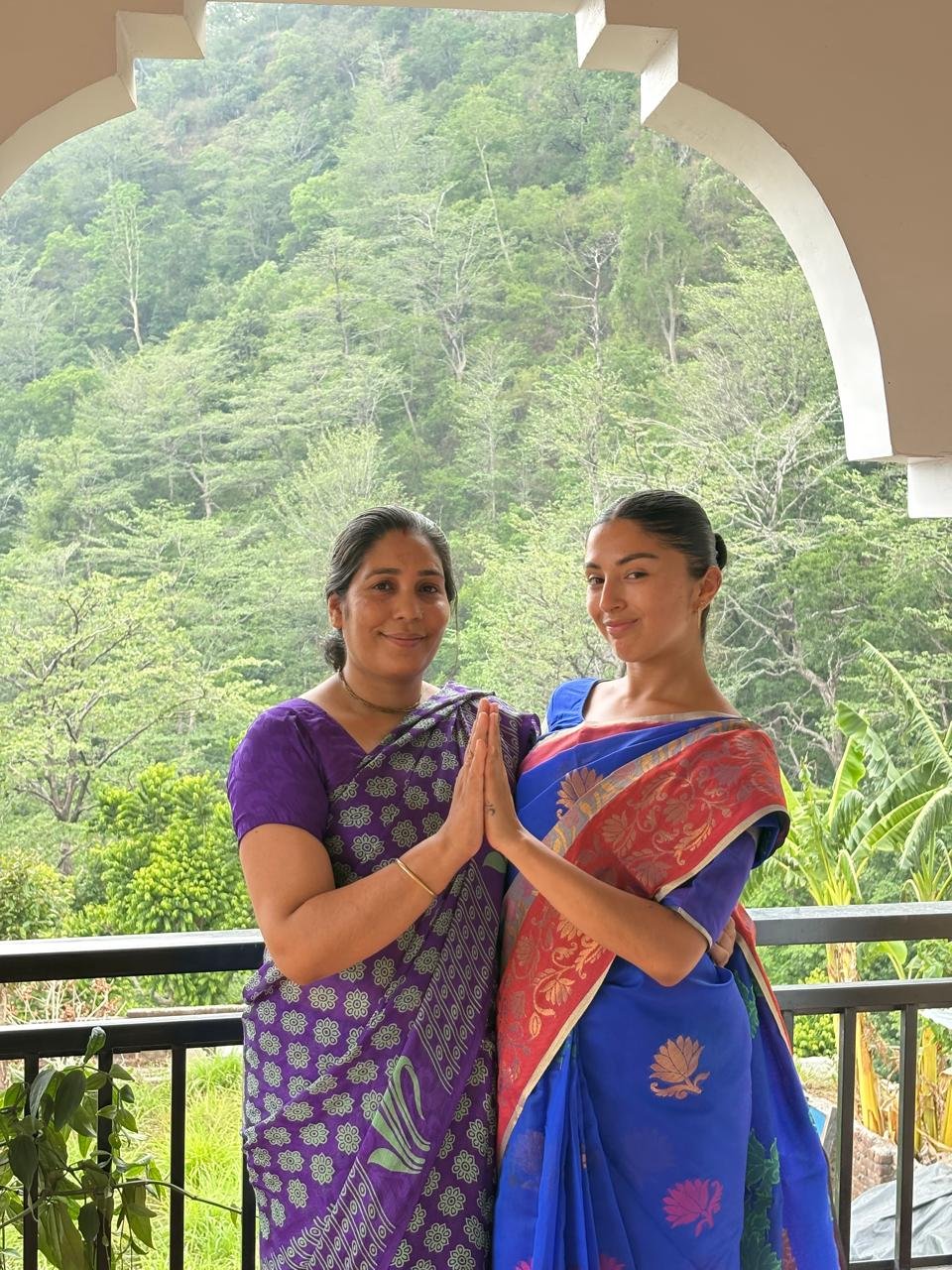
Every year guests at Om Homestay ask us the same thing: how to wear a saree for beginners without it falling apart in five minutes. Our host Anju has been wearing sarees since she was a young girl, and the first thing she says is this: do not worry about perfect pleats on day one. Get it secure and comfortable first. The neat look comes with practice.
Tie your underskirt at the waist, tuck one end of the saree in, take one full round, make 5 to 7 even pleats, tuck them at the front, then bring the rest of the cloth over your left shoulder as the pallu. Pin it, walk around, adjust. That is the Nivi drape, the most common style and the easiest one to start with.
What You Need Before You Start
Keep everything ready before you begin, so you do not run around half dressed with a long cloth in your hand. Here is the list we give our guests:
- A saree that is soft and not too slippery. Cotton is the easiest. Silk and georgette can slide.
- A blouse that fits well
- A cotton petticoat (underskirt) with a firm drawstring
- 5 or 6 small safety pins
- A full-length mirror
- The footwear you will wear later, so the length is right
Wear the petticoat first and tie it properly at the waist. This is the base of everything. If the petticoat is loose, the whole saree comes down with it.
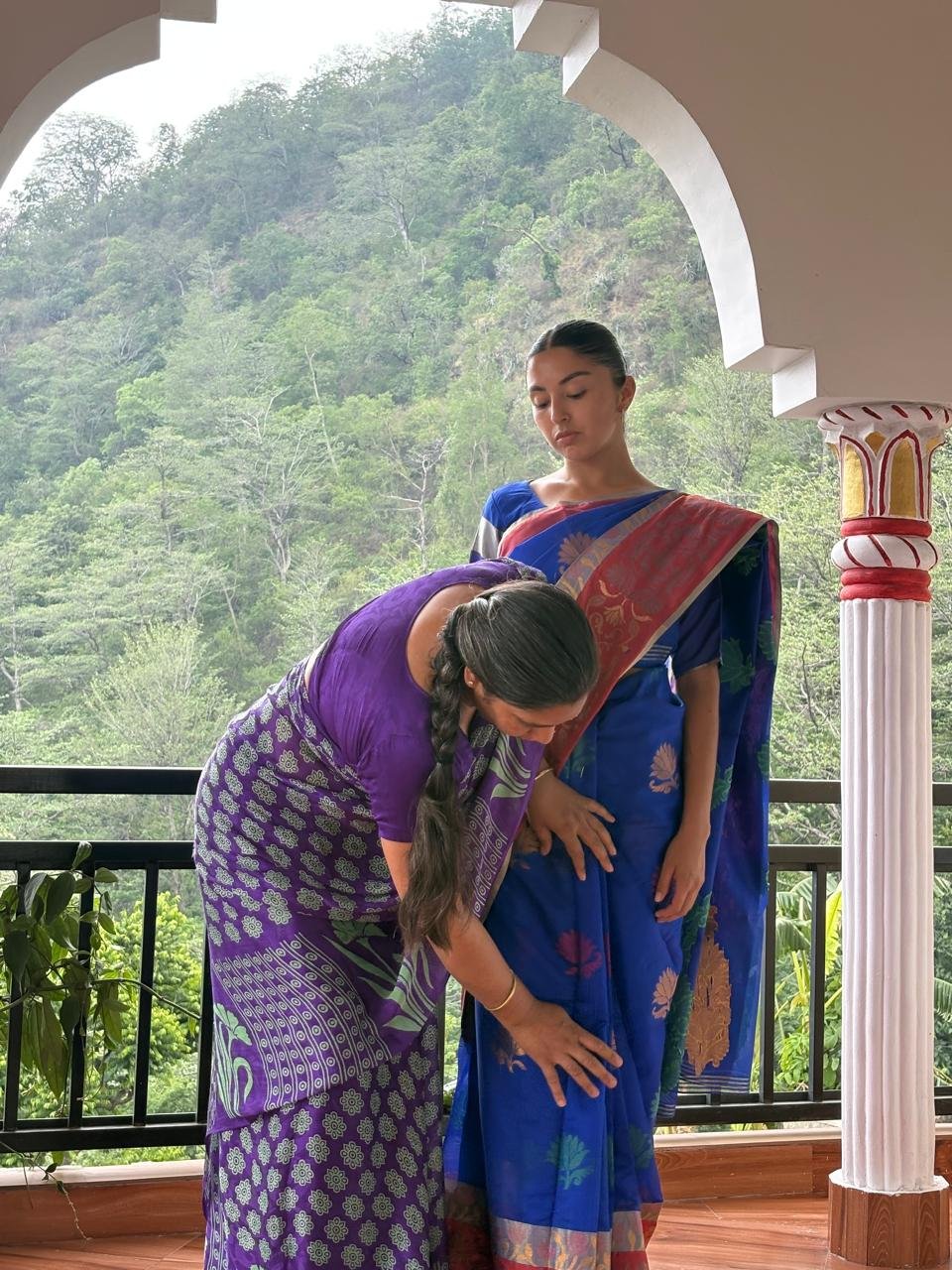
How to Wear a Saree: 6 Steps for Beginners
This is the Nivi style. Saree draping is different in every region of India, but this one is worn almost everywhere and it is the one most people learn first.
Tie the petticoat firmly
Tie it at your natural waist, not too tight to breathe and not so loose that it slips. Wear your blouse, and stand in your footwear.
Make the first tuck
Take the plain end of the saree (the end without the heavy design) and tuck it into the petticoat on the right side of your waist. Then take the cloth once around your body, back to the front.
Make the pleats
Gather about 5 to 7 pleats, each about as wide as your hand. Keep the edges lined up and hold them together. Uneven pleats are the most common mistake, so take your time here.
Tuck the pleats
Tuck the pleats into the petticoat at the front, a little to the left of your navel, with the folds pointing to the left. Check the hem. It should just touch the floor over your footwear without getting stepped on.
Bring the pallu over your shoulder
Take the remaining cloth around your back, from right to left, and bring it over the left shoulder. The pallu should fall down your back. Use one pin at the shoulder to hold it in place.
Walk, sit and fix
Walk a few steps. Sit down. Lift your arms. Climb one stair if you can. If something feels loose or tight, fix it now and not at the event.
Common Beginner Mistakes
Uneven pleats
The saree then looks twisted. Line the edges up before you tuck, and use a pin to hold the pleats together.
Wrong length
Too long and you will trip, too short and it looks odd. Always check the hem in the footwear you will actually wear.
Too many pins
Two or three pins in the right places are enough. Too many can damage fine fabric and feel uncomfortable.
Tying too tight
If you cannot sit comfortably, you have tied it too tight. A saree should move with you.
Which Saree Draping Style Should You Learn First?
Start with Nivi. It is simple, widely worn, and it works with most fabrics. After that you can explore other styles. Here is a small comparison for first-timers:
| Style | How it looks | Good for beginners? |
|---|---|---|
| Nivi | Front pleats, pallu over the left shoulder | Yes, best first style |
| Bengali style | Box-like pleats on the pallu, no front pleats in the usual way | Medium, needs a guide |
| Gujarati (seedha pallu) | Pallu comes from the back to the front over the right shoulder | Medium |
| Maharashtrian (nauvari) | Longer saree, draped like trousers between the legs | Harder, learn with a demonstration |
How many types of saree draping are there? There is no fixed number. India has many regional and community styles, and families often have their own way. If you need a style for a wedding or a festival from a particular region, it is best to learn that one from someone who wears it.
Is a Linen Saree Easy to Wear?
It depends on the cloth. Linen is light and airy, so many people like it in warm weather. But a stiff, crisp linen is hard to pleat and can feel bulky for a beginner. A soft linen or a linen blend is easier. If you are learning, practise at home with a cotton saree first, and move to linen when you are happy with the pleats.
Is Wearing a Saree Comfortable?
Yes, if it is fitted and tied the right way. Most problems come from a loose petticoat, a bad hem length or a slippery fabric. For long days, many women choose cotton. A good blouse and a well-tied petticoat do most of the work. Pins are only a small help.
Saree Draping Tips and Tricks
- Practise once before the day you really need it. Do the whole drape, start to finish.
- Use a mirror, but also ask someone to check your back and side.
- Keep the pleats flat with a pin on the inside if the fabric is slippery.
- Pin the pallu at the shoulder, but not so tight that your arm cannot move.
- Give yourself extra time with silk or georgette.
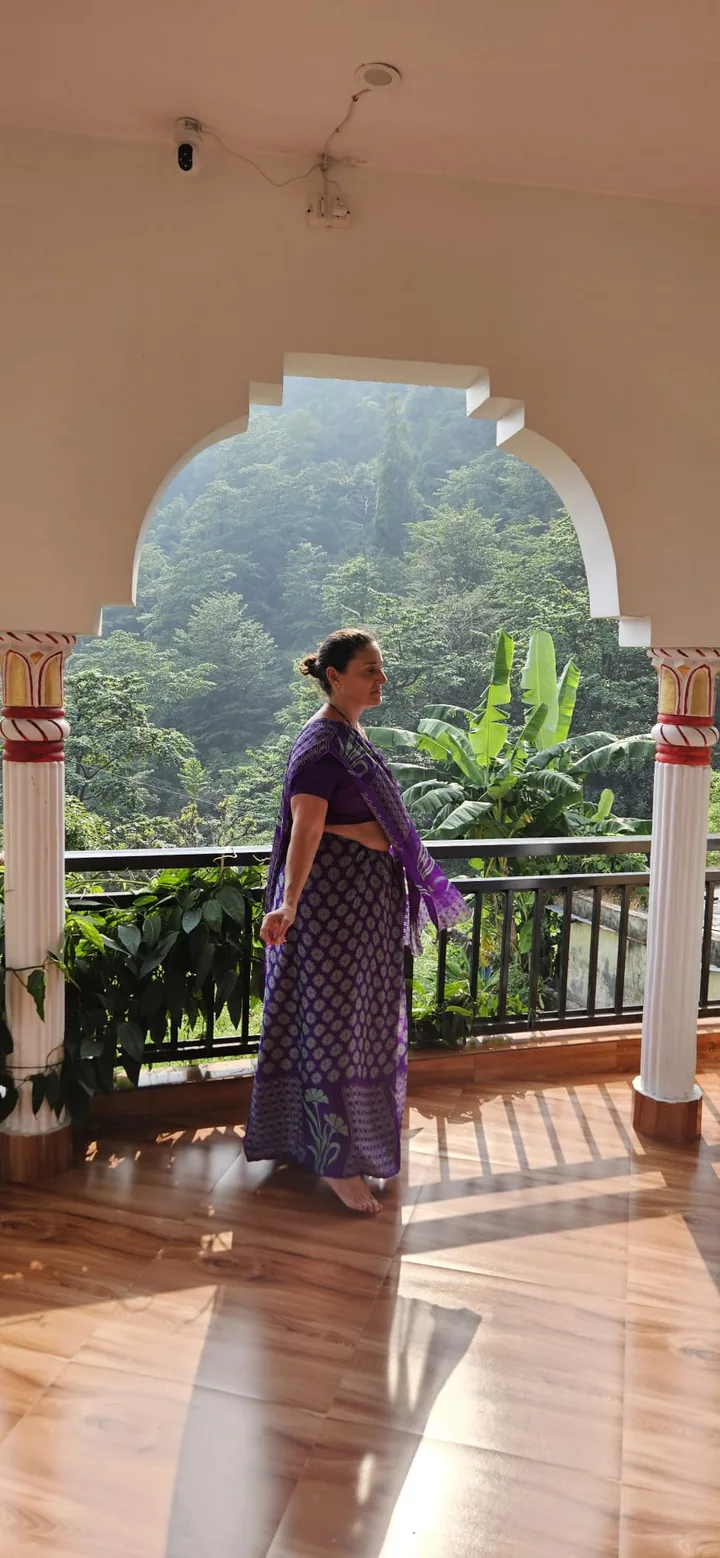
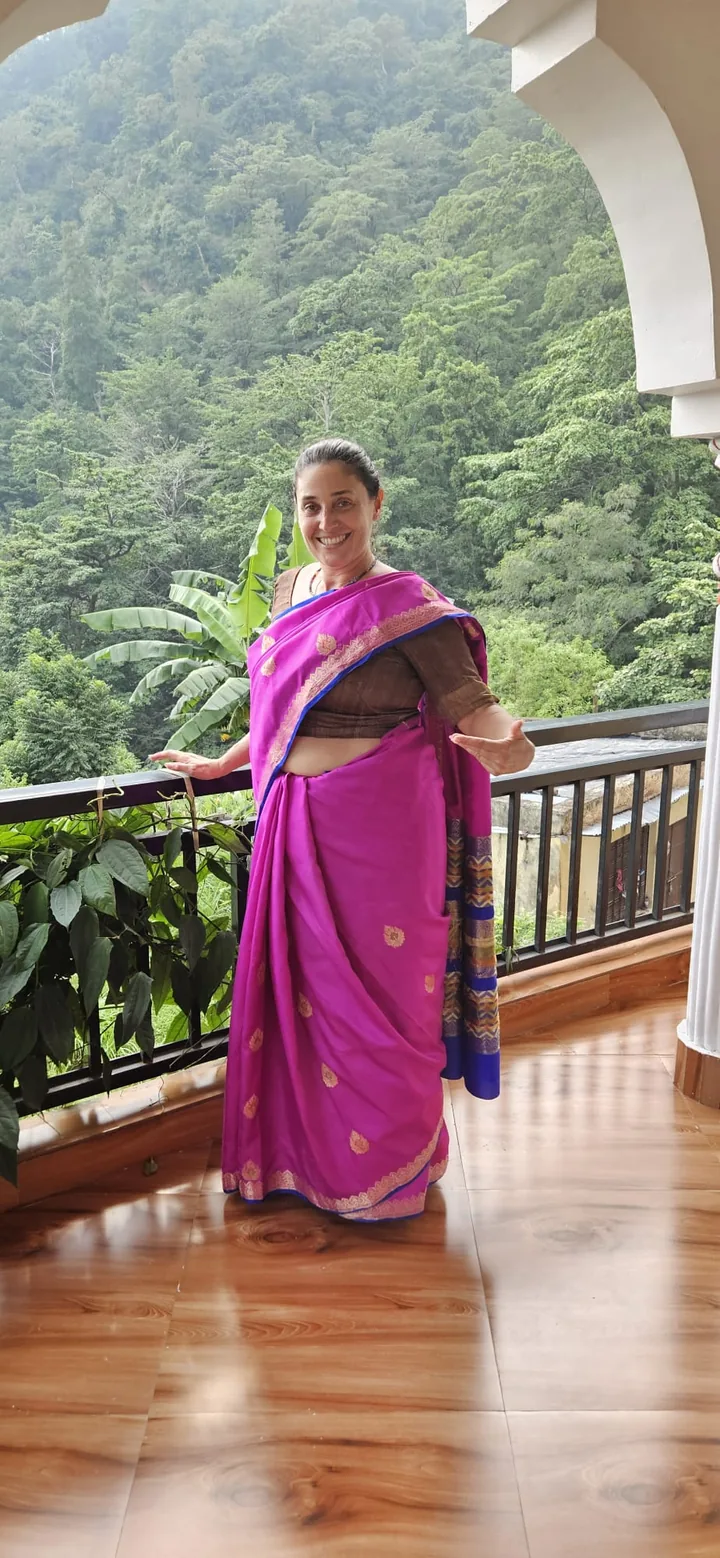
A Few Photos of Saree Styling at Om Homestay
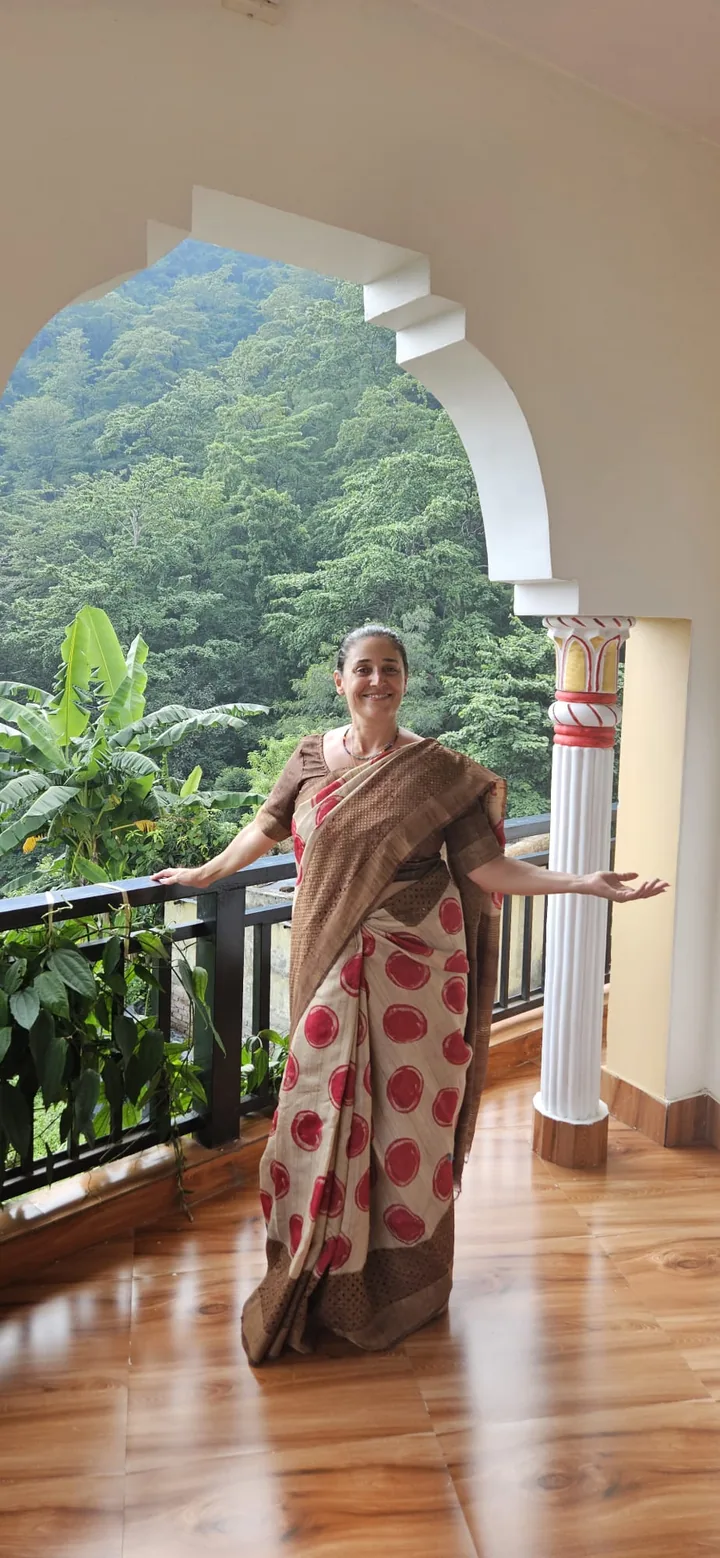
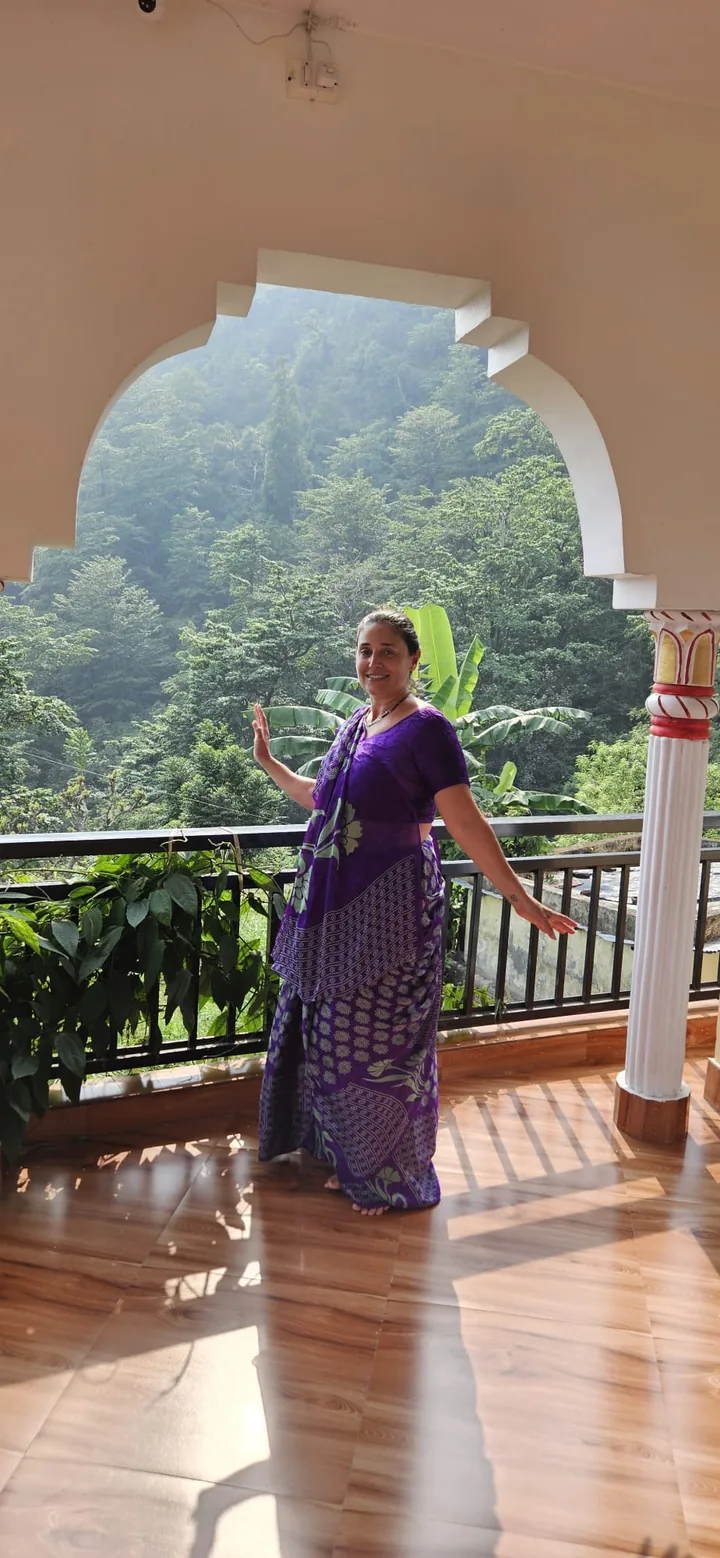
These are photos of Anju in some different saree looks. They are only for inspiration, so you can see how the drape falls.
Learn Saree Draping in Rishikesh With Anju
Reading steps is fine, but many people learn faster when someone shows them and corrects them as they go. If you are staying with us in Upper Tapovan, you can ask whether Anju can show you the basics during your visit. It depends on her time and on the day, so please message us before you come and do not plan around it without confirming.
Saree draping charges: we have not fixed a price here in this article. Message us and we will tell you if a session is possible, how it works and what it costs. If you also like cooking, you can try our North Indian cooking class, or look at our rooms in Tapovan if you are planning a stay.
Frequently Asked Questions
How can I learn saree draping as a complete beginner?
Start with a soft cotton saree and learn one style, the Nivi drape. Practise the tuck, the pleats and the pallu in front of a mirror, and repeat the whole drape a few times until it feels easy.
Can I learn to drape a saree without help?
Yes. Follow a step-by-step guide, go slowly and check the front, side and back in a mirror. A few safety pins will keep the pleats and pallu in place while you learn.
Is a linen saree easy to wear?
Soft linen and linen blends are fine for most beginners. Crisp, stiff linen is harder to pleat, so practise with cotton first.
How many types of saree draping are there?
There is no single number. Many regional and community styles exist across India, such as Nivi, Bengali, Gujarati and Maharashtrian nauvari.
How long does it take to wear a saree?
Beginners can take 20 to 30 minutes or more. With practice, many people finish in 10 to 15 minutes.
What are the saree draping charges at Om Homestay?
There is no fixed price listed. Please message us on WhatsApp to ask if a session with Anju is possible during your stay and what the charges would be.
Want to Learn the Saree in Person?
Send us a message and ask if Anju can show you the basics during your stay in Upper Tapovan, Rishikesh.