
Confluence of Bhagirathi and Alaknanda at Devprayag: Complete Guide (2026)
The confluence of the Bhagirathi and Alaknanda rivers at Devprayag in Uttarakhand is where the Ganga takes its name. Devprayag lies in the Tehri Garhwal district, about 74 km by road from Rishikesh, and is the last of the five sacred river confluences known as the Panch Prayag. This guide explains where the two rivers begin, the legend of Devprayag, what to see at the Sangam and the Raghunath Temple, and how to plan a visit.
Quick answer: where do the Bhagirathi and Alaknanda meet?
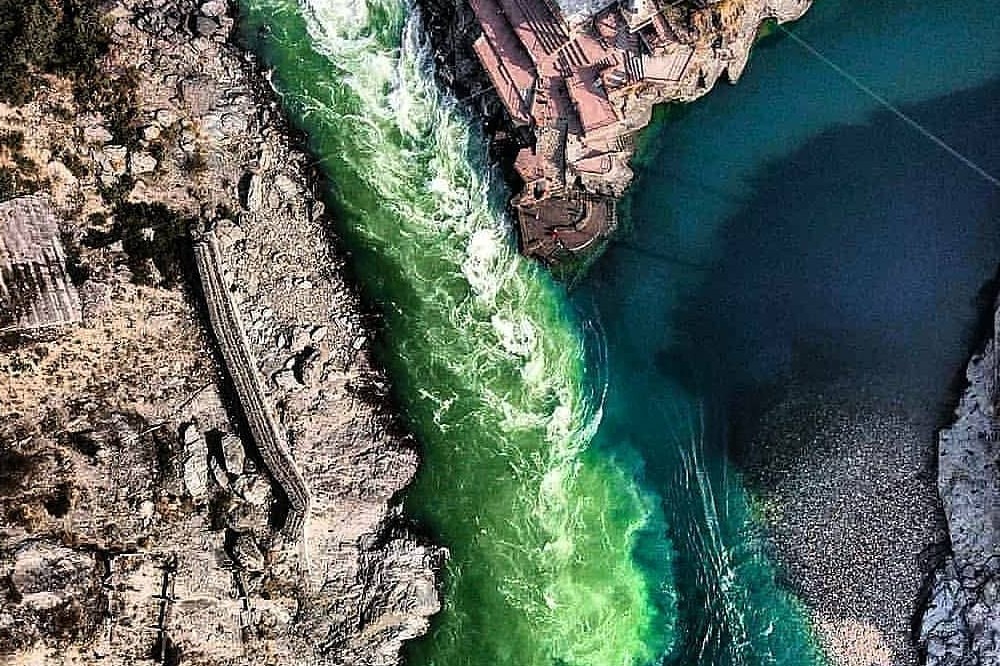
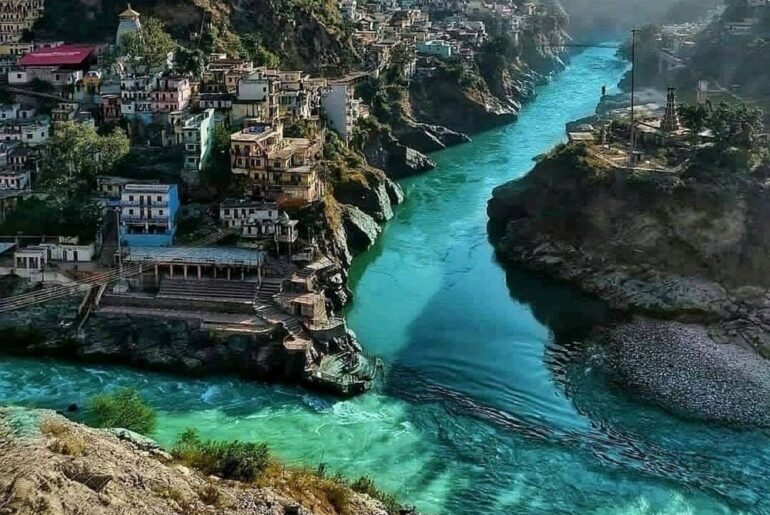
The Bhagirathi and Alaknanda rivers meet at Devprayag, a small temple town in the Tehri Garhwal district of Uttarakhand. From this point onward the combined river is called the Ganga. The meeting point is known as the Devprayag Sangam, and the town name means “divine confluence”. The Bhagirathi arrives from the Gaumukh glacier near Gangotri, and the Alaknanda arrives from the glaciers near Badrinath.
Devprayag Quick Facts
| Detail | Information |
|---|---|
| Rivers that meet | Bhagirathi and Alaknanda |
| What forms here | The Ganga (Ganges) main stem |
| Location | Devprayag, Tehri Garhwal district, Uttarakhand |
| Elevation | About 830 m (2,723 ft) |
| Distance from Rishikesh | About 74 km by road, usually 2 to 3 hours |
| Distance to Srinagar (Garhwal) | About 34 km |
| Main temple | Raghunath Temple, dedicated to Lord Rama |
| PIN code | 249301 |
| Railway station | None in operation yet |
Origin of the Bhagirathi and Alaknanda Rivers
Both rivers begin as Himalayan glacial streams, travel through steep Garhwal valleys and collect smaller rivers on the way before they meet at Devprayag.
Bhagirathi
- Begins at Gaumukh, at the snout of the Gangotri Glacier, in Uttarkashi district
- Source elevation about 3,890 m
- Flows through Gangotri, Uttarkashi and Tehri
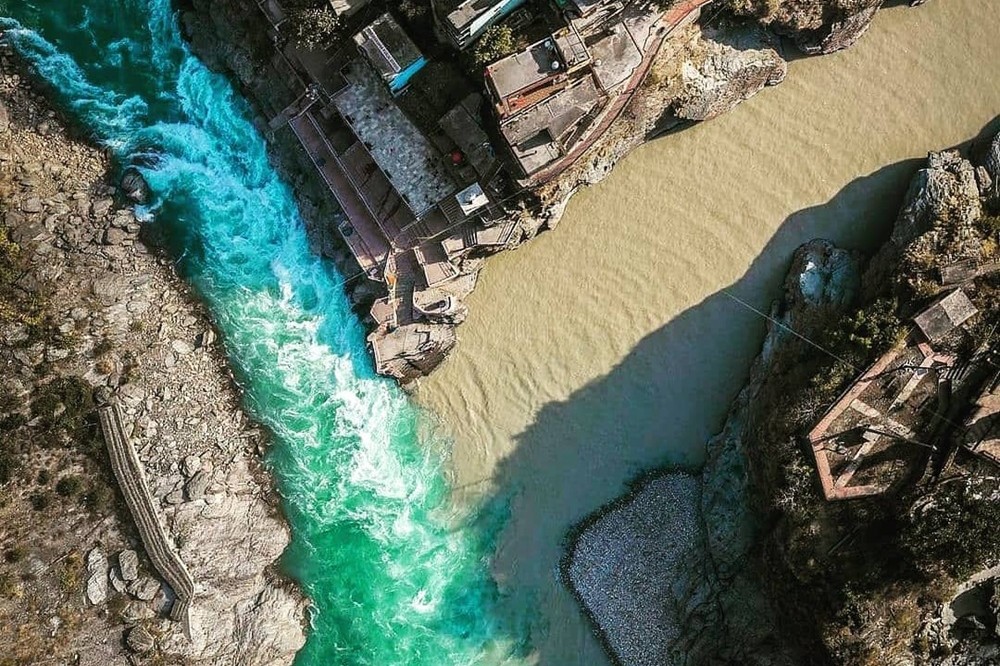
- Water is usually clearer, with a blue-green tone
Alaknanda
- Begins near the Satopanth and Bhagirathi Kharak glaciers above Badrinath, in Chamoli district
- Source elevation about 3,880 m
- Collects Dhauliganga, Nandakini, Pindar and Mandakini
- Carries more silt, giving a greyer, muddier tone, and contributes the larger share of the Ganga’s flow
The two rivers often show a visible colour difference at the Sangam, because the Alaknanda carries more sediment than the Bhagirathi. The contrast is easiest to see on clear days outside the monsoon, when the rivers are not swollen with rain.
Panch Prayag: The Five Confluences of the Alaknanda
Devprayag is the last of five sacred confluences, called the Panch Prayag, where the Alaknanda meets a tributary on its way down from Badrinath.
| Prayag | Rivers that meet |
|---|---|
| Vishnuprayag | Alaknanda and Dhauliganga |
| Nandprayag | Alaknanda and Nandakini |
| Karnaprayag | Alaknanda and Pindar |
| Rudraprayag | Alaknanda and Mandakini |
| Devprayag | Alaknanda and Bhagirathi, forming the Ganga |
The Legend of Devprayag
According to Hindu tradition, King Bhagirath performed severe penance to bring the celestial Ganga down to earth so that her waters could purify the ashes of his ancestors. Because the force of her descent could have destroyed the earth, Lord Shiva agreed to hold her in his matted locks and released her gently in the Himalayas. The river that followed Bhagirath is called the Bhagirathi in his honour.
Devprayag is regarded as the holiest point of this story, because it is where the Bhagirathi unites with the Alaknanda and the river becomes the Ganga. Pilgrims believe that a bath at the Sangam washes away sins and supports spiritual liberation. The legend is a matter of faith and tradition, and it is part of what makes the town a living pilgrimage site.
Devprayag Sangam Ghat
The Sangam Ghat is the stepped bathing ghat at the exact meeting point of the two rivers. Pilgrims bathe here and perform ancestral rituals, and local priests are available for prayers. The ghat sits between steep Himalayan slopes, and the sound of both rivers meeting is constant.
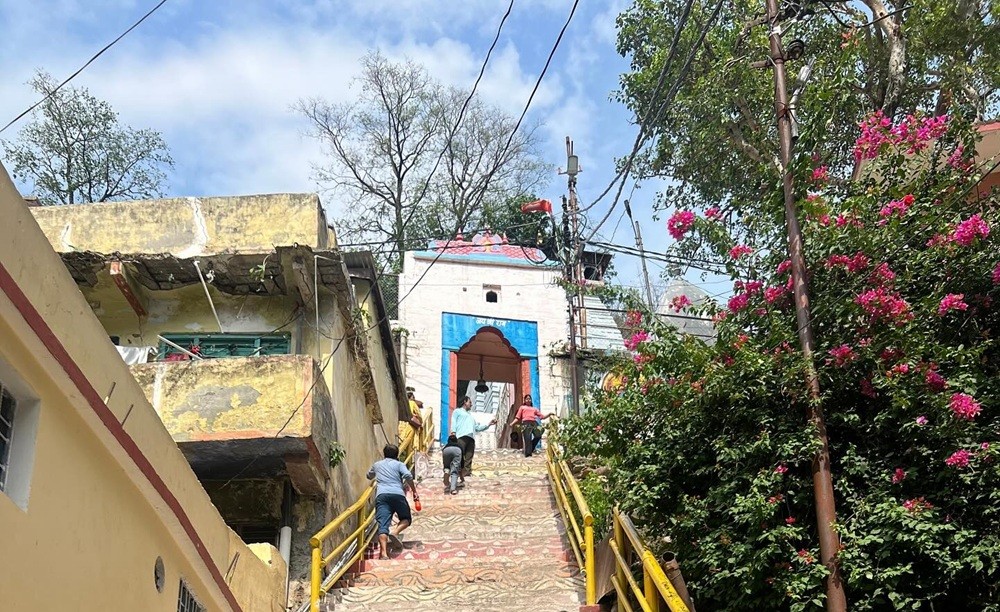
Steps lead down from the road to the ghat, and more steps connect the ghat with the Raghunath Temple above. Wear shoes with a good grip, as the steps can be wet and slippery, and take extra care when the rivers are high.
Raghunath Temple, Devprayag
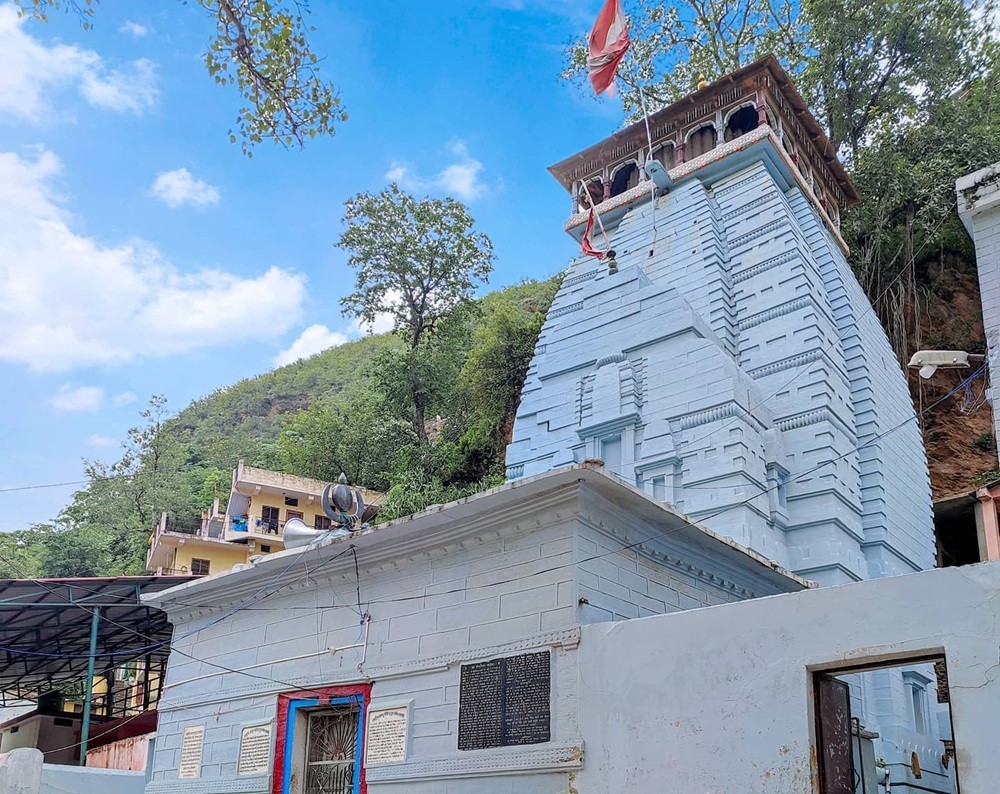
The Raghunath Temple is the main temple of Devprayag and is dedicated to Lord Rama, regarded as an incarnation of Vishnu. It stands above the Sangam and is among the oldest continuously worshipped temples in the Garhwal Himalaya. Local tradition links its consecration with Adi Shankaracharya, and the temple is counted among the sacred Vishnu shrines of the region.
A legend says that Lord Rama meditated here to atone after the war with Ravana. The temple is built in the North Indian Nagara style, with carved stone and a quiet inner sanctum. Priests perform daily pujas, and the walk up the stone steps from the Sangam is part of the visit.
Places to See in and Around Devprayag
| Place | What to expect |
|---|---|
| Devprayag Sangam | The meeting point of the two rivers, with views of the colour contrast from the ghat and bridges. |
| Raghunath Temple | The ancient Rama temple above the confluence. |
| Chandrabadni Devi Temple | A hilltop Shakti temple about 30 km away, at over 2,000 m, with wide Himalayan views. Allow half a day. |
| Central Sanskrit University campus | The Shri Raghunath Kirti Campus stands above the Sangam, on the site of an early 20th-century Sanskrit school, and teaches traditional Sanskrit subjects. |
Devprayag Railway Station: Current Status
There is no operating railway station at Devprayag yet. A Devprayag station is planned on the 125 km Rishikesh to Karnaprayag rail line, which is under construction and includes some of India’s longest rail tunnels, among them a stretch of about 14.6 km between Devprayag and Janasu. Reports indicate that the completion target for the full line has been pushed to around 2028. Until it opens, travellers reach Devprayag by road.
How to Reach Devprayag
| Mode | Details |
|---|---|
| Road | From Rishikesh take National Highway 7 towards Srinagar via Shivpuri, Byasi and Kaudiyala. The drive is about 74 km and usually takes 2 to 3 hours. |
| Bus and shared jeep | Buses and shared jeeps run from Rishikesh bus stand towards Devprayag and Srinagar. |
| Taxi | A private taxi from Rishikesh is the most flexible option for a same-day trip. |
| Train | No train yet. The nearest practical railheads are Rishikesh and Haridwar. |
Plan a day trip: Leave Rishikesh early, spend one to two hours at the Sangam and Raghunath Temple, and return before dark. Hill roads are slower at night. Devprayag also lies on the route from Rishikesh to Babaji Cave, so it combines well with that journey.
Best Time to Visit Devprayag
October to March
Clear skies and clearer water make the two river colours easy to see. Winter mornings are cold, so carry a warm layer.
April to June
Warm days and good access. Visit early in the morning to avoid the heat and crowds.
July to September
The rivers are high and muddy, and landslides can block the highway. Check the road and weather before you travel.
How to Visit the Devprayag Sangam: Step by Step
- Start early from RishikeshLeave by 7 AM so that you reach the Sangam in the morning light and avoid afternoon traffic.
- Park near the Sangam roadYour driver will stop near the town, and a short walk and a flight of steps lead to the ghat.
- Look at the confluence firstView the two rivers from the ghat or the bridge before you go down, to see the colour difference clearly.
- Take the ritual bath or offer prayersIf you plan to bathe, keep to the marked ghat steps, and avoid deep water when the river is high.
- Climb to the Raghunath TempleVisit the temple, remove footwear before entering, and keep phone use minimal.
- Continue or returnHead back to Rishikesh, or continue to Srinagar or Chandrabadni if you have more time.
Travel Tips for Devprayag
- Wear sturdy shoes, since the ghat and temple steps are steep and can be slippery.
- Do not swim in the river. The currents at the confluence are strong, and the water is cold and fast.
- Carry water, snacks and cash, because facilities in the small town are limited.
- Dress modestly at the temple and remove footwear at the entrance.
- Do not throw plastic, soap or other waste into the river.
- Check road conditions in the monsoon, when landslides are common on the highway.
Frequently Asked Questions: Devprayag and the Bhagirathi-Alaknanda Confluence
Where do the Bhagirathi and Alaknanda rivers meet?
They meet at Devprayag, in the Tehri Garhwal district of Uttarakhand. From this confluence the river is called the Ganga.
Which town is located at the confluence of the Bhagirathi and Alaknanda?
Devprayag is the town at the confluence. It is one of the five Prayags, or sacred confluences, of the Alaknanda river.
Where do the Bhagirathi and Alaknanda originate?
The Bhagirathi begins at Gaumukh, at the Gangotri Glacier in Uttarkashi district. The Alaknanda begins near the Satopanth glacier above Badrinath in Chamoli district.
Which district is Devprayag in?
Devprayag is in the Tehri Garhwal district of Uttarakhand. Its PIN code is 249301.
How far is Devprayag from Rishikesh?
Devprayag is about 74 km from Rishikesh by road, and the drive usually takes 2 to 3 hours on National Highway 7.
What is the elevation of Devprayag?
Devprayag is about 830 m (2,723 ft) above sea level.
Is the Bhagirathi a tributary of the Ganga?
The Bhagirathi and the Alaknanda are the two main headstreams of the Ganga. Neither is considered only a tributary, because the Ganga is formed from both at Devprayag.
Which rivers meet at Rudraprayag?
The Alaknanda and the Mandakini meet at Rudraprayag.
Is there a railway station at Devprayag?
Not yet. A station is planned on the Rishikesh to Karnaprayag rail line, which is still under construction, so visitors currently travel by road.
What is the best time to visit the Devprayag Sangam?
October to March is the best time, when the weather is clear and the colour contrast between the two rivers is easiest to see. The monsoon is best avoided because of high water and landslides.
Visiting Devprayag from Rishikesh?
Om Homestay in Upper Tapovan, Rishikesh is a quiet base for a Devprayag day trip. Message us on WhatsApp to check room availability and ask about taxis.
Distances, travel times and the railway status are approximate and can change. Check the latest road and rail updates before you travel.